


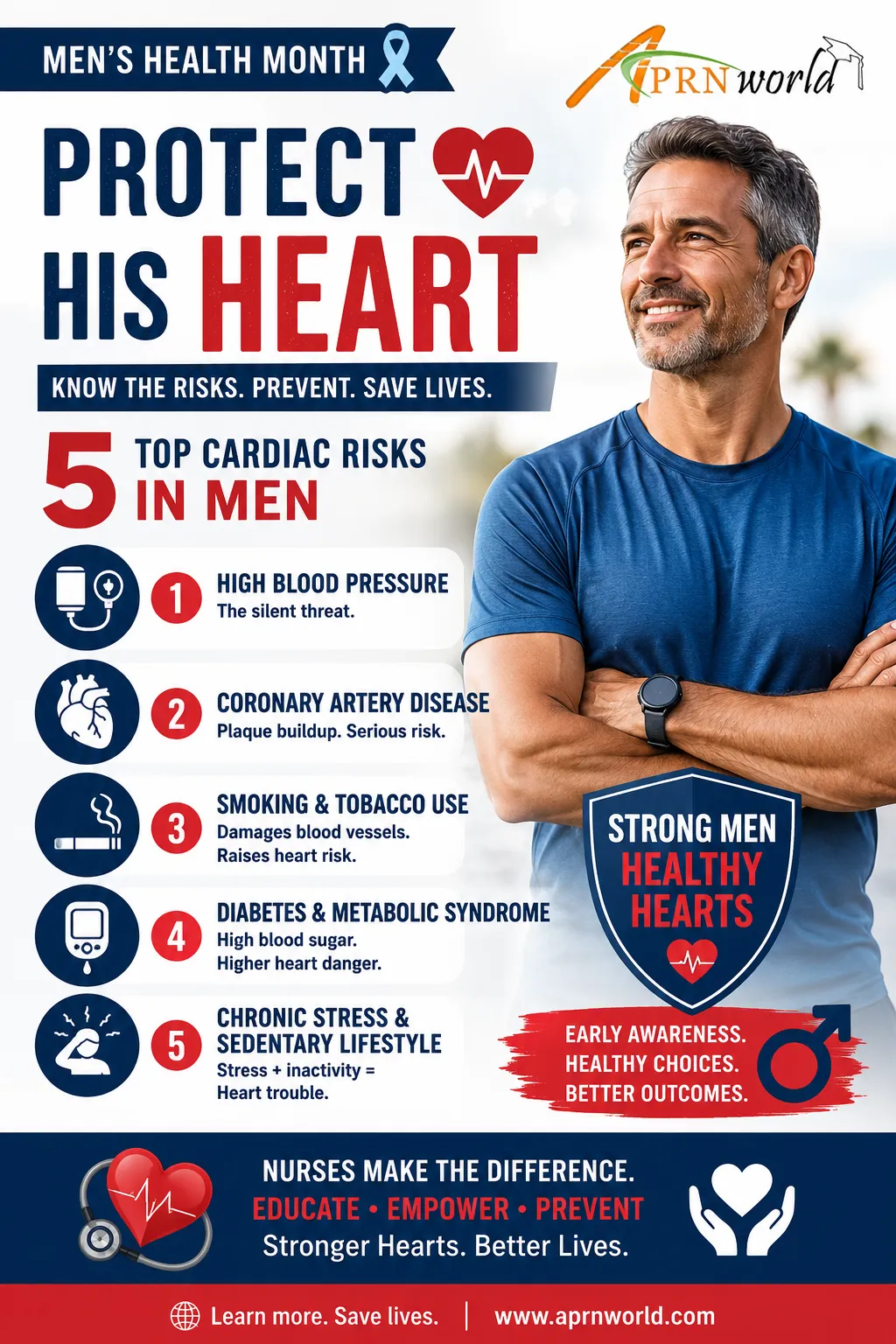
Top 5 Cardiac Risks in Men Every Nurse Should Know
Heart disease remains the leading cause of death among men worldwide. As nurses, we often encounter male patients who ignore early symptoms, delay preventive care, and seek medical attention only after significant cardiac damage has occurred. Understanding the most common cardiac risks in men can help healthcare professionals educate patients, promote early intervention, and improve long-term outcomes.
1. Hypertension (High Blood Pressure)
Hypertension is often called the “silent killer” because it can damage the heart and blood vessels for years without causing noticeable symptoms. Many men are unaware they have elevated blood pressure until complications such as heart failure, stroke, or myocardial infarction occur.
Encourage regular blood pressure screening.
Educate patients on reducing sodium intake.
Promote weight management and physical activity.
Reinforce medication adherence.
Early detection and consistent management can significantly reduce cardiovascular complications.
2. Coronary Artery Disease (CAD)
Coronary artery disease develops when plaque accumulates within the coronary arteries, restricting blood flow to the heart muscle. Men often develop CAD earlier than women and may present with classic symptoms such as chest pain, pressure, or shortness of breath.
Monitor for chest discomfort and atypical symptoms.
Assess risk factors including smoking, diabetes, and obesity.
Educate patients on heart-healthy lifestyle modifications.
Encourage regular cardiac evaluations for high-risk individuals.
Prompt recognition of CAD symptoms can be lifesaving.
3. Smoking and Tobacco Use
Smoking remains one of the most preventable causes of cardiovascular disease. Tobacco use damages blood vessels, promotes atherosclerosis, increases blood pressure, and significantly elevates the risk of heart attack and stroke.
Provide smoking cessation counselling.
Discuss nicotine replacement therapies and support programs.
Highlight the cardiovascular benefits of quitting.
Offer ongoing encouragement and follow-up.
Even long-term smokers experience substantial cardiovascular benefits after cessation.
4. Diabetes and Metabolic Syndrome
Men with diabetes face a significantly increased risk of cardiovascular disease. Elevated blood glucose levels contribute to vascular damage, inflammation, and accelerated plaque formation.
Monitor blood glucose and HbA1c levels.
Educate patients on nutrition and exercise.
Encourage routine cardiovascular screenings.
Reinforce medication and insulin compliance.
Managing diabetes effectively can dramatically reduce cardiac complications.
5. Chronic Stress and Sedentary Lifestyle
Many men experience chronic work-related stress, poor sleep patterns, and limited physical activity. These factors contribute to hypertension, obesity, arrhythmias, and increased cardiovascular risk.
Assess stress levels during patient encounters.
Encourage regular exercise and stress-management techniques.
Promote adequate sleep and work-life balance.
Discuss mental health resources when appropriate.
Lifestyle modification remains one of the most powerful tools in preventing heart disease.
How APRN World Trains Nurses in Prevention with Cardiac Pharmacology: 4th Edition
As nurses, we understand that preventing cardiovascular disease starts with education, early intervention, and effective medication management. APRN World's Cardiac Pharmacology: 4th Edition, available through Amazon and AACN, equips nurses with essential knowledge of antihypertensives, antiarrhythmics, anticoagulants, statins, and other cardiac medications that play a vital role in reducing the top cardiac risks in men.
The resource provides practical, evidence-based guidance for managing conditions such as hypertension, coronary artery disease, diabetes-related cardiovascular complications, smoking-related vascular damage, and lifestyle-associated heart disease. By strengthening pharmacology knowledge and clinical decision-making skills, nurses are better prepared to support prevention, early intervention, and long-term cardiovascular health.
Key Benefits for Nurses:
Strengthens understanding of commonly prescribed cardiac medications.
Enhances patient education and medication adherence strategies.
Supports evidence-based cardiovascular prevention and management.
Improves confidence in identifying medication-related risks and side effects.
Promotes better patient outcomes through informed clinical practice.
Nurses play a critical role in identifying cardiac risk factors, educating patients, and promoting preventive care. Through regular screenings, lifestyle counselling, and evidence-based medication management, healthcare professionals can help reduce the burden of cardiovascular disease among men.
By understanding the top cardiac risks and staying current with cardiovascular pharmacology through resources such as APRN World's Cardiac Pharmacology: 4th Edition, nurses can empower patients to take control of their heart health and potentially prevent life-threatening cardiac events before they occur.
