


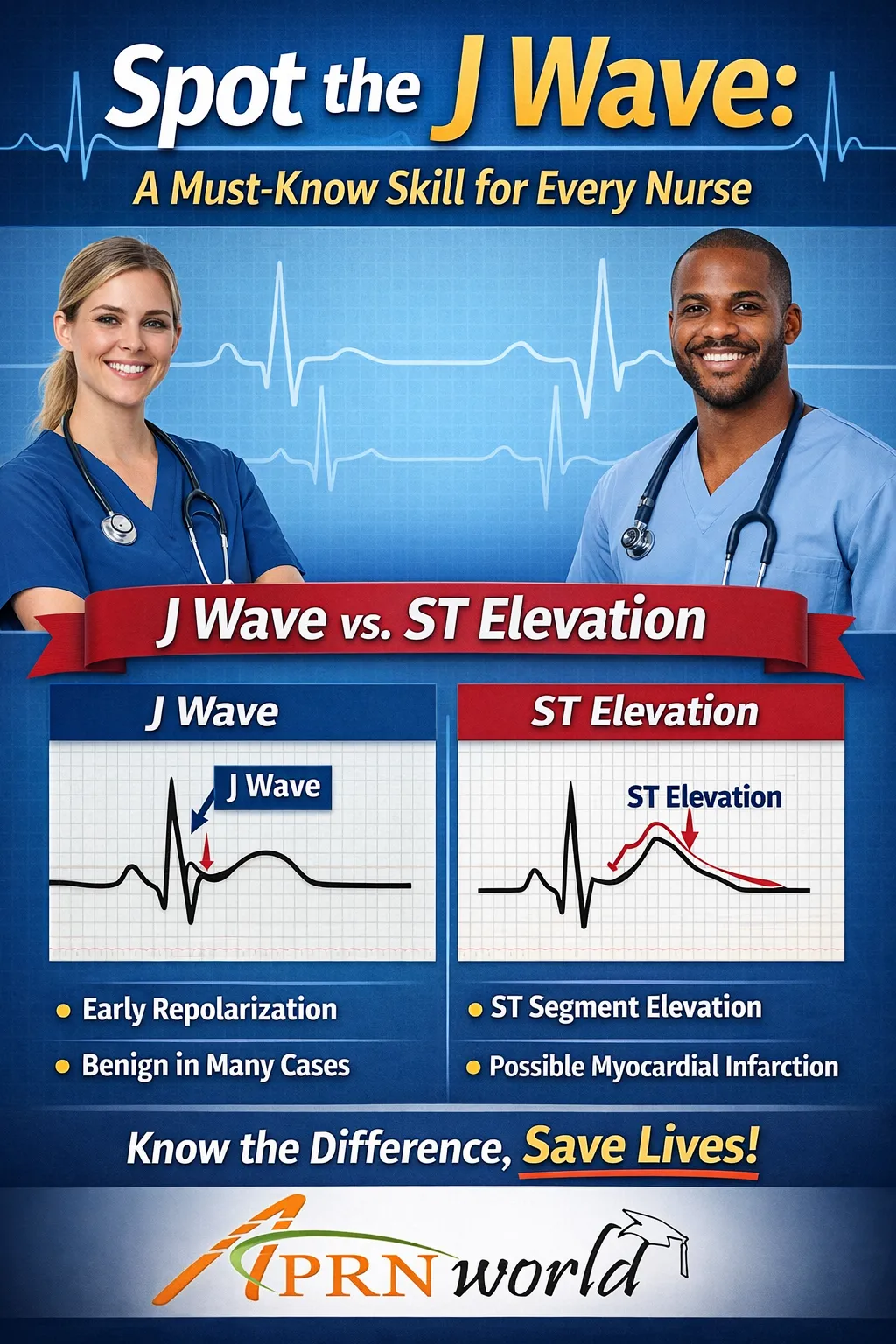
Spot the J Wave: ECG Recognition Guide for Nurses | Osborn Wave Explained
Are you facing difficulty in recognizing Osborne Waves (J Waves)?
Recognizing J waves (Osborne waves) on ECG is a critical skill for nurses working in emergency, cardiac, and critical care settings.
They are mostly associated with hypothermia (classic cause), hypercalcemia, early repolarization, brugada syndrome, neurological injuries (e.g., brain hemorrhage).
Research published through the National Institutes of Health highlights that J waves may be associated with an increased risk of ventricular arrhythmias, especially in hypothermic patients.
Additionally, cardiology literature referenced by the American College of Cardiology emphasizes the importance of differentiating J waves from ST-elevation myocardial infarction (STEMI) to avoid misdiagnosis and unnecessary interventions.
intraventricular blocks or STEMI (ST-elevation myocardial infarction).
Shockingly many nurses are facing the challenges in interpreting EKGs.
This happened due to the following reasons:
1.Lack of basic ECG training during nursing school
2.Advanced arrhythmia interpretation skills
3.Busy ERs and ICUs – Nurses make rapid decisions without detailed EKG analysis
4.Delayed diagnosis can impact on patient care and will eventually reduce the confidence of nurses in cardiac monitoring.
Why Osborne Waves Training Is Essential Today?
With increasing cases of:
Cardiac complications
Emergency presentations
Complex patient profiles
Nurses must be equipped to:
Identify rare but critical ECG findings
Intervene early to prevent complications
Cardiovascular Risk Assessment and right diagnosis are the initial and prominent steps to be taken in cardiac care.
Treatment Based on Cause
1. Hypothermia (Most Common Cause)
·Primary solution: Gradual rewarming
·Methods: warm IV fluids, heated blankets, warm oxygen
·Continuous ECG monitoring (risk of ventricular arrhythmias)
2. Electrolyte Imbalance (e.g., Hypercalcemia)
·Correct electrolyte levels
·IV fluids, medications as needed
·Monitor cardiac rhythm closely
3. Neurological Injury
·Manage underlying brain condition
·ICU monitoring may be required
4. Cardiac Risk / Arrhythmias
·Continuous cardiac monitoring
·Treat arrhythmias per ACLS protocols
APRN World with 15 + years of experience in empowering nurses with Structured EKG & Arrhythmia Training at very low cost to simplify complex EKG patterns like Osborne waves and to provide step-by-step interpretation methods.
RNs, APRNs and other health professionals must be updated with latest clinical guidelines regarding new EKG interpretation standards, emerging cardiac research.
APRN World has designed courses with:
Case-based learning
Scenario-based critical thinking
This helps nurses to recognize Osborne waves in real clinical settings and to act quickly and confidently
APRN World offers interactive learning tools:
FREE EKG Simulator initiated by APRN World allows hands-on ECG practice and repeated exposure to rare patterns like J waves. This bridges the gap between theory and practice.
Confidence Building for U.S. Nurses
With certification, nurses can:
Improve diagnostic accuracy
Enhance patient safety
Strengthen clinical decision-making skills
Career Advancement Opportunities
Certification supports:
Professional growth for RNs and APRNs
Increased credibility in cardiac care
Better job opportunities in critical care settings
Grab cardiac and pharmacology guides written by experts from AACN and Amazon.
