


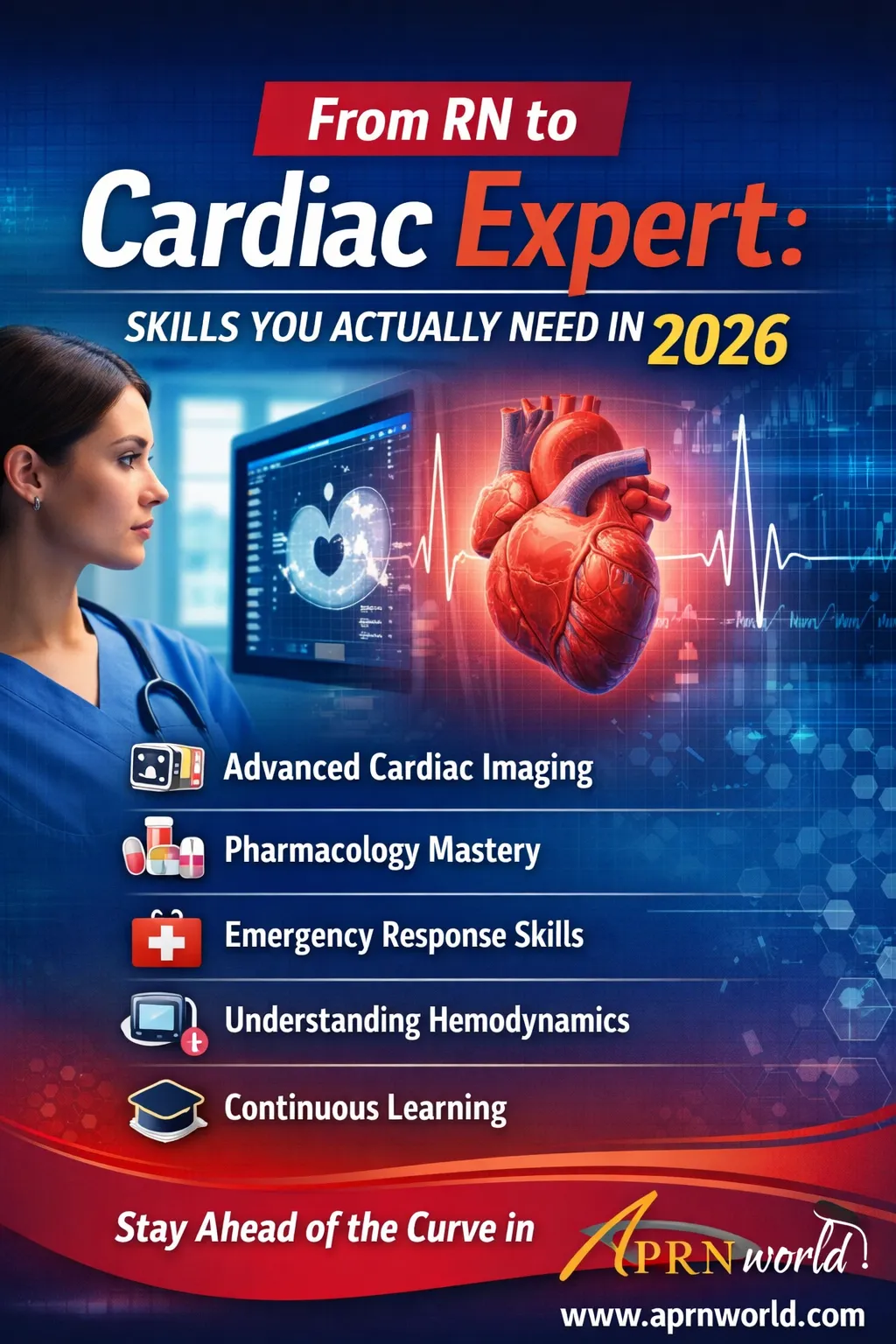
RN to Cardiac Expert: Essential Cardiac Nursing Skills for 2026
A rhythm shift. Subtle chest discomfort. A blood pressure trending down.
These aren’t things you can afford to miss.
Over time, you do get better but not just through experience. You improve by using the right tools, asking sharper clinical questions, and building skills deliberately.
Learning to Read Beyond the Monitor
Early in your career, EKG interpretation often means memorizing waveforms, intervals, and rhythm patterns.
But true clinical mastery begins when you understand the electrophysiological basis behind them:
Is this arrhythmia due to abnormal automaticity, triggered activity, or re-entry circuits?
How are electrolyte imbalances (K⁺, Mg²⁺, Ca²⁺) influencing conduction?
Is there underlying ischemia altering myocardial depolarization?
For example:
Hyperkalemia → peaked T waves, widened QRS
Hypokalemia → U waves, risk of ventricular arrhythmias
Ischemia → ST depression/elevation due to altered repolarization gradients
Practicing with EKG simulators strengthens pattern recognition + pathophysiology linkage, which is critical in acute care.
Cardiology in 2026: What’s Changing Clinically
Modern cardiology is shifting toward precision and early detection:
Coronary CT Angiography (CCTA) enables non-invasive plaque visualization, improving early CAD diagnosis
AI-assisted EKG interpretation enhances detection of subtle arrhythmias and LV dysfunction
Remote Patient Monitoring (RPM) allows continuous tracking of heart rate variability, arrhythmias, and fluid status
Emerging Pharmacology Insight
GLP-1 receptor agonists (e.g., semaglutide)
- Reduce major adverse cardiovascular events (MACE)
- Improve endothelial function and reduce inflammation
These are not just trends instead they’re reshaping preventive cardiology and chronic disease management.
Pharmacology: Thinking Beyond Drug Names
Cardiac pharmacology becomes clearer when you think in hemodynamic effects:
Preload reducers→ nitrates ↓ venous return
Afterload reducers → ACE inhibitors ↓ systemic vascular resistance
Inotropes → increase myocardial contractility (e.g., dobutamine via β1 stimulation)
Beta-blockers reduce myocardial oxygen demand by ↓ HR and contractility
Calcium channel blockers alter AV node conduction and vascular tone
RAAS inhibition prevents ventricular remodelling post-MI
Understanding mechanism + physiological response is what prevents clinical errors.
Emergency Response: The Physiology of Deterioration
In emergencies, recognizing early physiological decline is the key:
↓ Cardiac output → ↓ tissue perfusion → ↑ lactate
Compensatory tachycardia → eventual decompensation
Hypotension + narrow pulse pressure → possible cardiogenic shock
Clinical Insight
Shock progression:
Compensated– vital signs near normal
Decompensated – hypotension, altered perfusion
Irreversible – cellular injury, organ failure
Experienced nurses don’t just react, they anticipate deterioration.
Hemodynamics becomes easier when you focus on relationships:
MAP = CO × SVR
Cardiac Output (CO) = HR × Stroke Volume
Key Interpretations
Hypotension and tachycardia can cause hypovolemia.
Low cardiac output (CO) combines with high systemic vascular resistance (SVR)) → Cardiogenic shock
High cardiac output (CO) combines with low systemic vascular resistance (SVR) → distributive shock
You’re not just reading numbers. Instead you’re interpreting circulatory physiology in real time.
Cardiac care evolves with:
New clinical guidelines
Advancements in interventional cardiology
Innovations in digital health with AI
Short, focused learning improves knowledge retention and clinical application far more than passive reading.
Use the technology in the right way.
Modern tools include:
Wearable EKG monitors
Implantable loop recorders
Telemetry with predictive analytics
Clinical expertise lies in:
Filtering relevant data
Identifying critical deviations
Acting at the right time
Some competencies take time:
Clinical intuition
Communication under pressure
Escalation judgment
These skills cannot be taught quickly.
Daily EKG interpretation practice
Applying pharmacology to real cases
Reviewing critical care scenarios
Taking focused cardiac courses
Asking questions without hesitation
All these practices will accelerate your growth.
APRN World Provides Practical Resources That Support Learning
EKG simulators for rhythm mastery
Structured pharmacology guides
Pocket references for quick decisions
Examples:
12-Lead EKG Pocket Card (Available on AACN, Amazon)
These tools enhance not replace clinical experience.
Why Structured Arrhythmia Training At APRN World Matters
High-quality programs provide:
Evidence-based learning
Real-case simulations
Stepwise clinical reasoning
Courses like:
help bridge theory to decision-making.
Becoming a cardiac expert is not a moment it’s a progression:
From recognition to understanding
From reaction to anticipation
In 2026, the difference isn’t just experience.
It’s how intentionally you build your skills.
Don’t wait until you feel ready.
You grow the most when you step forward before you feel fully prepared.
