


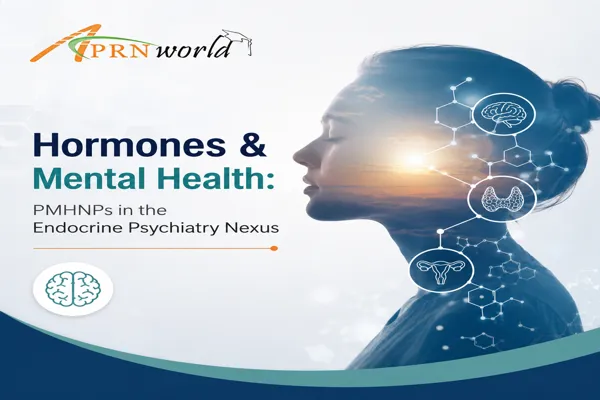
Hormones & Mental Health: Why PMHNPs Must Master the Endocrine-Psychiatry Connection
As healthcare continues to embrace a more holistic understanding of mental illness, one area is rapidly gaining attention: the powerful relationship between hormones and mental health. For Psychiatric Mental Health Nurse Practitioners (PMHNPs), understanding this connection is no longer optional, it is becoming an essential component of evidence-based psychiatric care.
Mood disorders, anxiety, cognitive dysfunction, sleep disturbances, psychosis, and treatment-resistant psychiatric symptoms are often influenced by endocrine dysfunction. Thyroid disorders, reproductive hormone fluctuations, insulin resistance, cortisol dysregulation, and neuroendocrine abnormalities can significantly impact mental health outcomes. Emerging research is now highlighting what many experienced clinicians have long suspected: the brain and endocrine system function as an interconnected network rather than separate systems.
This growing field often referred to as endocrine psychiatry or metabolic psychiatry is creating exciting opportunities for PMHNPs to deliver more comprehensive, patient-centered care.
Many psychiatric presentations have underlying hormonal contributors that may go unrecognized during routine mental health assessments.
A patient with treatment-resistant depression later diagnosed with hypothyroidism
Severe anxiety symptoms linked to hyperthyroidism
Cognitive complaints and mood instability during perimenopause
Postpartum depression influenced by dramatic hormonal fluctuations
Fatigue, low motivation, and depressive symptoms associated with testosterone deficiency
Mood disorders complicated by insulin resistance and metabolic dysfunction
When hormonal factors are overlooked, patients may experience delayed diagnosis, inadequate treatment response, and unnecessary medication adjustments.
PMHNPs who understand endocrine influences can identify these contributors earlier and collaborate effectively with endocrinologists, primary care providers, and women's health specialists.
Recent studies continue to demonstrate significant relationships between endocrine function and psychiatric disorders.
A 2025 genetic correlation study found meaningful associations between sex hormones including testosterone, estradiol, and sex hormone-binding globulin (SHBG) and psychiatric conditions such as major depressive disorder, schizophrenia, anorexia nervosa, and ADHD. Researchers concluded that endocrine and psychiatric disorders may share underlying biological pathways.
In 2026, experts highlighted how neuroendocrine mechanisms influence emotional regulation, appetite, cognition, psychosis risk, and mood disorders. Hormonal fluctuations during puberty, reproductive transitions, and aging appear to play critical roles in symptom development and disease progression.
Research in metabolic psychiatry is also revealing strong links between insulin resistance, inflammation, mitochondrial dysfunction, obesity, and psychiatric illness. These findings are reshaping how clinicians approach treatment-resistant mental health conditions.
Additional research presented at ENDO 2025 suggested that oxytocin may help buffer mood disturbances associated with sleep disruption and reproductive hormonal changes, opening new avenues for understanding postpartum and menopause-related psychiatric symptoms.
Traditional psychiatric education often focuses heavily on neurotransmitters while providing limited exposure to endocrine influences on mental health.
Today's PMHNPs increasingly encounter patients experiencing:
Menopause-related mood changes
Postpartum psychiatric disorders
Polycystic Ovary Syndrome (PCOS)-related mental health concerns
Thyroid-related depression and anxiety
Metabolic syndrome associated with psychotropic medications
Stress-related cortisol dysregulation
Hormone-related cognitive dysfunction
Understanding the endocrine-psychiatric interface allows clinicians to:
·Recognize hormonal contributors to psychiatric symptoms
·Order and interpret appropriate laboratory studies
·Differentiate psychiatric illness from endocrine disorders
·Improve treatment planning
·Enhance interdisciplinary collaboration
·Deliver more personalized care
To help advanced practice nurses stay ahead of this rapidly evolving field, APRN World offers this specialized course ‘Hormones & Mental Health: PMHNPs in the Endocrine Psychiatry Nexus’.
Designed specifically for PMHNPs and advanced practice nurses, this course explores the complex relationship between endocrine function and psychiatric health.
Participants gain practical knowledge that can be immediately applied in clinical practice to improve patient outcomes.
Mental health providers are increasingly recognizing that psychiatric symptoms cannot always be explained by neurotransmitters alone. Hormones, metabolism, inflammation, sleep, and stress physiology all contribute to mental wellness.
As the fields of endocrine psychiatry and metabolic psychiatry continue to evolve, PMHNPs who develop expertise in these areas will be better positioned to identify root causes, improve treatment outcomes, and provide truly comprehensive care.
The future belongs to clinicians who can bridge the gap between psychiatry and medicine—and this course helps prepare PMHNPs to lead that transformation.
Advance Your Expertise Today
If you're ready to expand your clinical knowledge and strengthen your ability to manage complex psychiatric presentations, the Hormones & Mental Health: PMHNPs in the Endocrine Psychiatry Nexus course from APRN World is an excellent opportunity to stay current with emerging evidence and enhance patient care.
References
Sethi S, Berk M, Andreazza AC, et al. Metabolic Psychiatry Targeting Metabolic Dysregulation in Mental Health. Nature Mental Health. 2026;4:508-520.
Van Den Noortgate M, et al. Immune-Neuroendocrine Crosstalk in Mood and Psychotic Disorders: A Meta-analysis and Systematic Review. Brain, Behavior, and Immunity - Health. 2025.
Allostatic Load in Psychiatry: A Systematic Review and Meta-analysis. Stress. 2026.
