


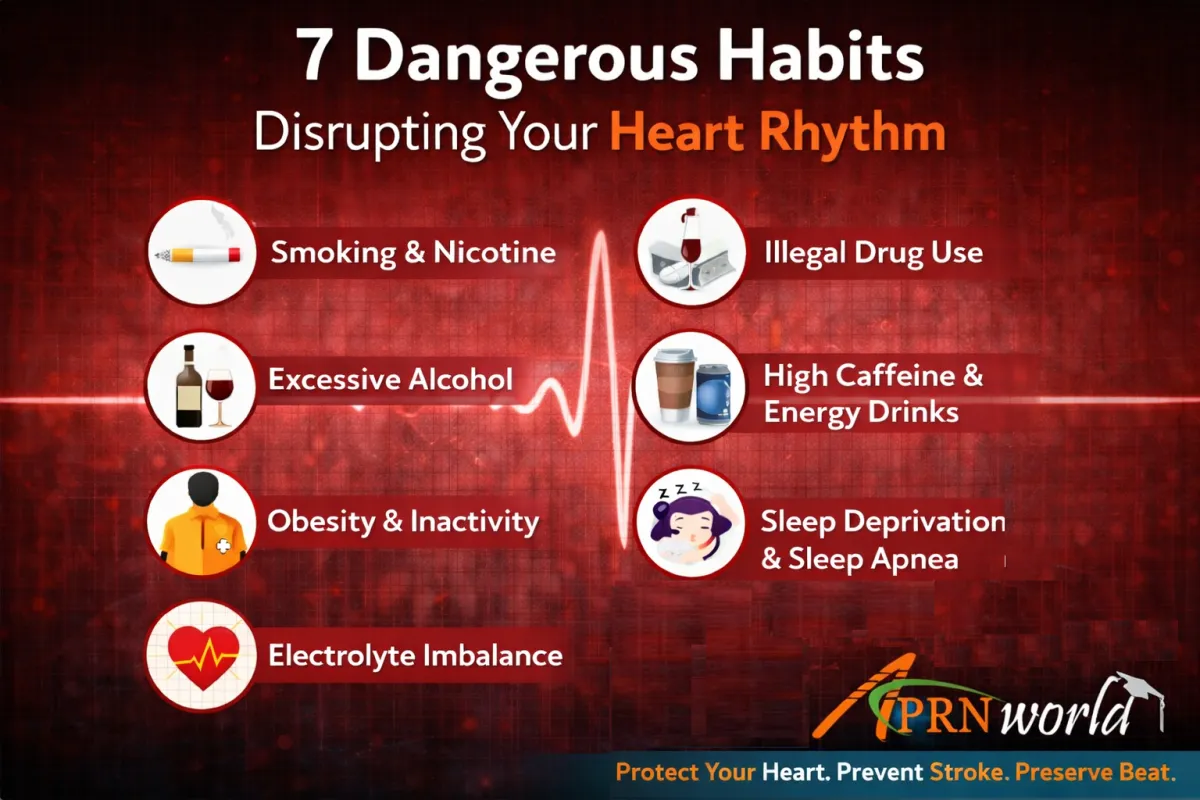
7 Dangerous Habits Disrupting Your Heart Rhythm
Protect Your Heart. Prevent Stroke. Preserve Every Beat.
Your heart doesn’t just beat! It Communicates!
A healthy heart efficiently supplies oxygen to vital organs so that your brain stays sharp, your muscles stay strong, and your body stays alive. When your cardiac rhythm is stable, oxygen flows smoothly. When it’s disrupted, the consequences can be devastating. This can lead to cardiac arrest, stroke, heart failure, and permanent disability.
At APRN World, we believe every heartbeat matters and most rhythm disorders are predictable, preventable, and treatable.
The National Institutes of Health and the American Heart Association warn that dangerous lifestyle habits can trigger cardiac arrhythmias, especially atrial fibrillation (A Fib).
The NIH highlights that many A Fib cases are linked to modifiable lifestyle factors, making prevention possible. Sudden cardiac death and arrhythmias account for approximately 15–20% of global deaths and continue to rise worldwide.
If left untreated, arrhythmias can lead to cardiac arrest, stroke, heart failure, and sudden death. Lifestyle behaviours, stress, mineral imbalances, and certain medications significantly contribute to rhythm disturbances.
What is Cardiac Arrhythmia?
A cardiac arrhythmia is any abnormality in the heart’s electrical conduction system. The rhythm may become:
Too fast (tachycardia)
Too slow (bradycardia)
Irregular (like atrial fibrillation)
One of the most common and dangerous types is Atrial Fibrillation (A Fib), a condition where the upper chambers of the heart quiver instead of contracting effectively. This reduces efficient blood flow and increases clot formation risk.
Untreated AFib dramatically increases stroke risk. Sometimes there are no visible symptoms.
The truth?
Most arrhythmias don’t start overnight. They build silently.
The 7 Most Dangerous Habits Disrupting Your Heart Rhythm & Learn How to Prevent Them
1️. Smoking and Nicotine Exposure
This is one of the most powerful preventable risk factors for heart disease and rhythm disorders.
How it disrupts rhythm:
Nicotine stimulates adrenaline release
Coronary vessels constrict
Heart rate increases
Oxygen demand rises while oxygen delivery falls
This imbalance primes the heart for arrhythmias including A Fib and ventricular dysrhythmias.
APRN World Action Tip: Every clinical encounter is an opportunity for structured smoking cessation counselling.
2️. Use Of Illegal Drugs (Cocaine, Amphetamines)
Illegal stimulants are among the most dangerous acute triggers for arrhythmias and sudden cardiac events.
These substances cause a massive surge of catecholamines (adrenaline and noradrenaline), drastically elevating heart rate and blood pressure.
This immediate overload often leads to:
Ventricular tachycardia
Ventricular fibrillation
Acute myocardial infarction
Sudden cardiac arrest
Cardiovascular collapse from stimulant use can occur even in young, otherwise healthy adults.
3️. Excessive Alcohol (Holiday Heart Syndrome)
Alcohol’s effect on rhythm goes beyond intoxication.
Even episodic binge drinking can trigger AFib, a phenomenon known as “Holiday Heart Syndrome.”
Alcohol impacts rhythm by:
Disrupting electrolyte balance
Altering vagal tone
Impairing cardiac conduction
Repeated misuse increases long-term risk of persistent A Fib and structural atrial changes.
4️. High Caffeine and Overuse of Energy Drinks
Caffeine in moderation is generally safe but high doses and energy drinks are different:
They combine caffeine with other stimulants (like taurine and guarana), which can:
Trigger palpitations
Cause premature beats
Increase sympathetic nervous activity
Mask dehydration and electrolyte shifts
Patients with underlying arrhythmia often report rhythm changes after heavy caffeine or energy drink intake.
5️. Obesity and Sedentary Lifestyle
Being overweight isn’t just a metabolic risk, it’s an electrical risk.
Obesity promotes:
Hypertension
Systemic inflammation
Insulin resistance
Left atrial enlargement
These structural changes create a pro-arrhythmic cardiac substrate.
Meanwhile, physical inactivity worsens metabolic dysfunction and vascular stiffness compounding rhythm risk.
Encourage consistent, moderate cardiovascular exercise to improve heart rate variability without over-straining unconditioned hearts.
6️.Sleep Deprivation and Obstructive Sleep Apnea (OSA)
Sleep matters for more than energy, it matters for rhythm.
OSA causes intermittent oxygen loss and repeated sympathetic surges during sleep. These physiological shocks create:
Hypertension
Atrial remodelling
Increased A Fib incidence
Resistance to rhythm control therapies
Screening for sleep disorders is essential in arrhythmia prevention.
7️. Electrolyte Imbalance and Poor Nutrition
Your heart’s electrical system depends on:
Potassium
Magnesium
Calcium
Deficiencies especially low potassium or magnesium are common triggers for:
Premature ventricular contractions (PVCs)
Ventricular tachycardia
Dangerous conduction delays
These imbalances often arise from:
Diuretic use
Dehydration
Poor diet
Alcohol misuse
APRN World recommends APRNs, NPs & Clinicians to check electrolytes routinely in arrhythmia presentations, especially in patients on cardiac or diuretic medications.
Early Signs of Rhythm Disturbance
Beware of the following symptoms:
Fluttering or “thumping” sensation
Unexplained fatigue
Dizziness or light-headedness
Intermittent palpitations
Shortness of breath
Anxiety or chest discomfort
Silent arrhythmias are frequently discovered only through ECG monitoring — another reason regular screening matters.
A Proactive Strategy for APRNs, NPs & Clinicians
As frontline clinicians, you have the unique opportunity to recognize subtle abnormalities, guide patient awareness, and act before complications arise.
·Incorporate rhythm assessments into routine vitals
·Take detailed lifestyle histories
·Screen for sleep disorders
·Monitor electrolytes and metabolic panels
·Offer structured lifestyle modification support
·Educate patients on warning signs and when to seek emergency care
Why This Matters for Patients?
Cardiac arrhythmias are not random — they’re often predictable.
And in many cases, they’re preventable.
By addressing these seven dangerous habits, you:
Improve oxygen delivery to vital organs
Enhance energy, productivity, and cognitive clarity
Reduce stroke and heart failure risk
Increase quality of life and lifespan
What APRN World Does for You?
Every heartbeat matters for us.
Not because it’s automatic but because it’s influenced by every choice we make.
Advance your cardiac expertise with clinically focused, low-cost training at APRN World.
With 15+ years of dedicated cardiac education experience, APRN World supports APRNs, NPs, and clinicians across the globe in advancing their rhythm recognition and prevention skills.
Advance your rhythm interpretation skills today. Get our expertly designed EKG and Cardiac Pharmacology guides through AACN and Amazon.
