
Sinus Arrest vs. Sinus Exit Block: Key Differences Every Nurse Should Know
APRN World · August 10, 2025 · 2 min read
Introduction
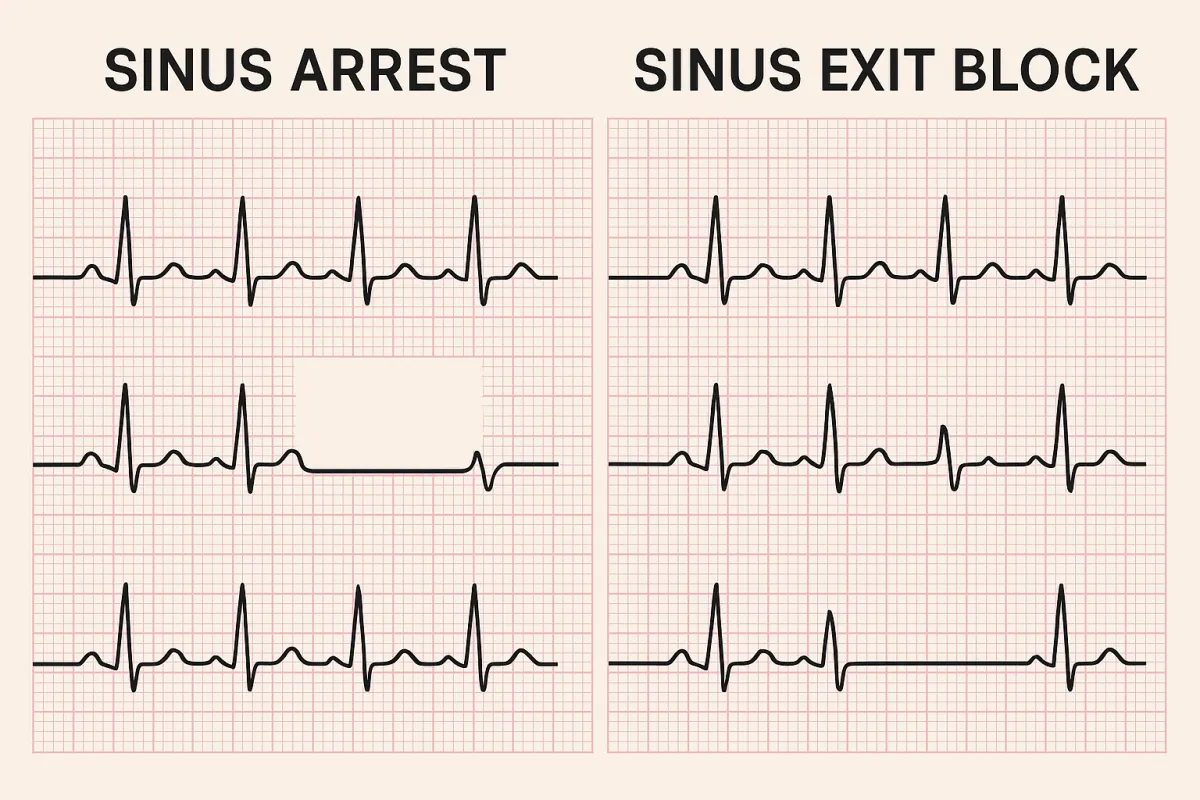
In clinical practice, differentiating sinus arrest from sinus exit block is a crucial skill for nurses, EKG technicians, and other healthcare providers. Both conditions present as pauses on the EKG, but their underlying mechanisms and clinical implications differ. Misinterpreting them can lead to incorrect diagnosis and management. This guide will break down the differences, provide EKG examples, and show how mastering these distinctions can enhance patient care.
What is Sinus Arrest?
Sinus arrest occurs when the SA node fails to generate an impulse for one or more beats.
- EKG Findings:
- Pause of irregular length (not a multiple of the baseline P–P interval)
- Missing P wave, QRS complex, and T wave during the pause
- Causes:
- Sick sinus syndrome
- Vagal stimulation
- Myocardial ischemia
- Medications (e.g., beta-blockers, calcium channel blockers)
What is Sinus Exit Block?
Sinus exit block happens when the SA node fires normally, but the impulse is blocked before reaching the atria.
- EKG Findings:
- Pause that is an exact multiple of the baseline P–P interval
- Consistent atrial rhythm except for the blocked beat(s)
- Causes:
- Increased vagal tone
- Digitalis toxicity
- Electrolyte imbalances
Key Differences at a Glance
In sinus arrest, the SA node fails to fire, resulting in an irregular pause that is not a multiple of the baseline P–P interval. During this pause, there is no firing activity from the SA node, and on the EKG, the pause appears “off-beat” compared to the regular rhythm. In contrast, sinus exit block occurs when the SA node fires normally but the impulse is blocked before reaching the atria. This produces a pause that is an exact multiple of the baseline P–P interval, giving the appearance of a “missing beat” on the EKG while maintaining the overall rhythm pattern.
Why This Matters in Clinical Practice
Accurate recognition of sinus arrest vs. sinus exit block is essential for:
- Determining underlying cause
- Deciding if urgent intervention (e.g., pacing) is needed
- Preventing unnecessary interventions
- Guiding appropriate medication adjustments
How to Learn More
APRN WORLD’s Arrhythmia Recognition Course offers in-depth training with real EKG strips, case studies, and practice quizzes to help you master these concepts and pass EKG interpretation assessments with confidence.
Call to Action (CTA):📚 Boost your EKG interpretation skills today — Enroll in the APRN WORLD Arrhythmia Recognition Course and become the rhythm expert your patients deserve.
Turn this into CE hours
Explore accredited courses on this topic and earn contact hours toward your renewal.