
Preload and Afterload: Essential Hemodynamic Concepts
APRN World · August 17, 2025 · 2 min read
Introduction
In cardiovascular nursing, few concepts are as foundational as preload and afterload. These hemodynamic principles determine how the heart fills and pumps, directly influencing cardiac output and patient outcomes. For registered nurses (RNs), especially those working in critical care, cardiology, or advanced practice settings, mastering preload and afterload is essential for interpreting vital signs, managing fluids, and administering cardiovascular medications.
At APRN WORLD, we provide affordable, evidence-based, and visually engaging continuing education (CE) programs that help nurses deepen their clinical knowledge. This article explores preload and afterload in practical terms relevant to bedside care.
What is Preload?
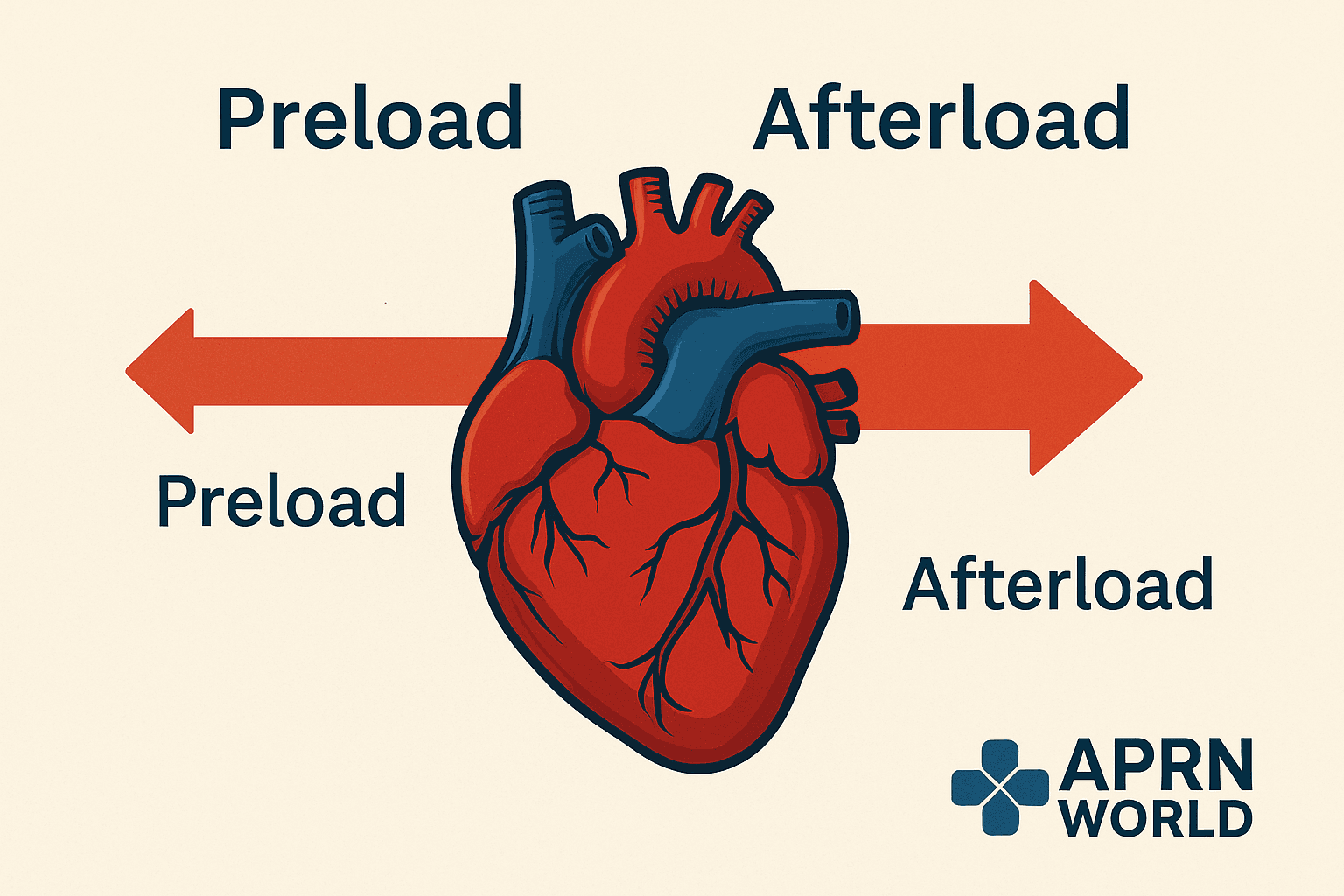
Preload refers to the ventricular filling volume at the end of diastole—essentially the “stretch” of cardiac muscle fibers before contraction.
- Determinants: Venous return, circulating blood volume, and atrial contraction.
- Clinical Example: In hypovolemia, preload decreases due to low circulating volume. Conversely, fluid overload increases preload, often observed in heart failure patients.
- Nursing Insight: Jugular venous distension (JVD) and pulmonary crackles are clinical signs of increased preload.
What is Afterload?
Afterload is the resistance the left ventricle must overcome to eject blood into circulation.
- Determinants: Systemic vascular resistance (SVR) and arterial pressure.
- Clinical Example: Hypertension increases afterload, making it harder for the heart to pump effectively. Vasodilators reduce afterload and improve cardiac output.
- Nursing Insight: Blood pressure trends and systemic perfusion provide indirect indicators of afterload.
The Relationship Between Preload, Afterload, and Cardiac Output
- Frank-Starling Mechanism: Within limits, an increase in preload enhances stroke volume. However, excessive preload can cause pulmonary congestion.
- Balancing Act: Optimal cardiac performance requires a balance between preload and afterload. Too much resistance (afterload) or too little filling (preload) impairs cardiac output.
Nursing Implications in Practice
- Fluid Management
- Administering IV fluids increases preload.
- Diuretics reduce preload in patients with heart failure.
- Blood Pressure Control
- Antihypertensives (e.g., ACE inhibitors, vasodilators) reduce afterload.
- Vasopressors (e.g., norepinephrine) increase afterload when perfusion is low.
- Critical Care Monitoring
- Central venous pressure (CVP) provides an estimate of preload.
- Mean arterial pressure (MAP) reflects afterload and systemic perfusion.
Continuing Education with APRN WORLD
At APRN WORLD, our CE modules are designed to make complex topics like preload and afterload easy to understand, visually engaging, and clinically applicable. Our Cardiac Hemodynamics CE for Nurses includes:
- Illustrated guides to preload and afterload.
- Case-based examples linking fluid therapy and medication management.
- Interactive quizzes to reinforce learning.
These courses are cost-effective and tailored for busy nurses, allowing you to gain high-quality education without disrupting your schedule.
Conclusion
Understanding preload and afterload empowers nurses to make informed clinical decisions, especially in patients with heart failure, shock, or hypertension. By mastering these concepts, RNs can enhance patient outcomes and improve confidence in cardiovascular care.
Explore APRN WORLD’s cardiac CE courses to expand your knowledge and advance your nursing practice today.
Turn this into CE hours
Explore accredited courses on this topic and earn contact hours toward your renewal.