
Paroxysmal Atrial Tachycardia: Causes, Symptoms, and Management
APRN World · August 17, 2025 · 1 min read
Introduction
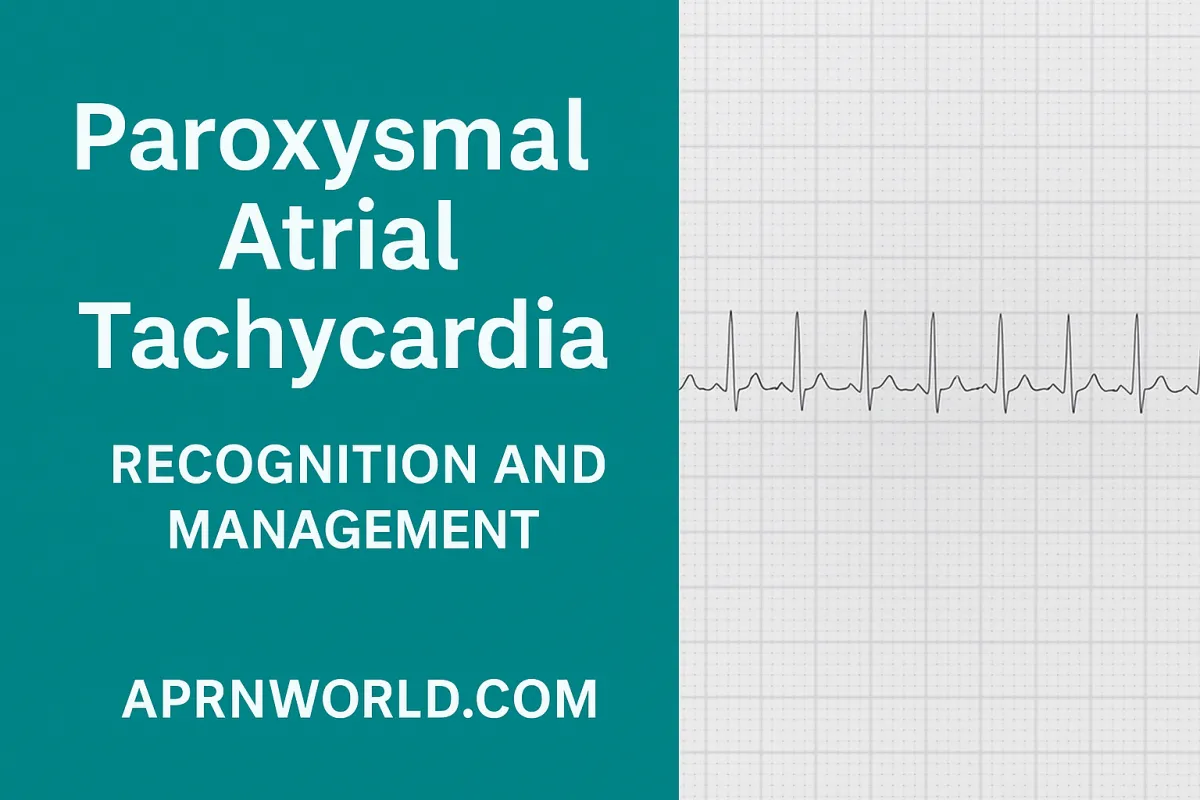
Paroxysmal Atrial Tachycardia (PAT) is a type of supraventricular tachycardia (SVT) characterized by sudden episodes of rapid heart rate originating from the atria. While these episodes often start and stop abruptly, they can cause significant symptoms and impact a patient’s quality of life.
At APRNWORLD.com, our Arrhythmia Recognition and ECG Interpretation Courses equip healthcare professionals with the skills to identify, interpret, and manage arrhythmias like PAT effectively.
Causes of Paroxysmal Atrial Tachycardia
- Enhanced automaticity in atrial tissue
- Triggered activity from afterdepolarizations
- Reentry mechanisms in the atria or AV node
- Common triggers: caffeine, alcohol, stress, electrolyte imbalance, digitalis toxicity, hyperthyroidism
Symptoms
Patients may experience:
- Sudden onset of palpitations
- Rapid heartbeat (usually 150–250 bpm)
- Shortness of breath
- Chest discomfort or pressure
- Lightheadedness or dizziness
- Fatigue
Diagnosis
- ECG: Narrow QRS complexes with regular rhythm, abnormal P-wave morphology depending on origin
- Holter monitoring for intermittent episodes
- Event monitors or implantable loop recorders for infrequent symptoms
Management of PAT
Acute Episodes:
- Vagal maneuvers (Valsalva, carotid sinus massage – if no contraindication)
- Adenosine IV (first-line in stable patients without contraindications)
- Beta-blockers or calcium channel blockers for rate control
Chronic/Preventive Treatment:
- Antiarrhythmic medications (Class IC or III agents, as appropriate)
- Catheter ablation for recurrent, drug-resistant PAT
- Addressing underlying causes (electrolyte correction, medication review)
Why ECG Training is Important for PAT
PAT can mimic other supraventricular arrhythmias, and misinterpretation may lead to delayed or inappropriate treatment. APRN WORLD’s courses teach:
- Differentiating PAT from atrial flutter, AVNRT, and sinus tachycardia
- Understanding electrophysiologic mechanisms behind PAT
- Case-based practice for accurate diagnosis
📍 Enroll now at APRNWORLD.com
Turn this into CE hours
Explore accredited courses on this topic and earn contact hours toward your renewal.